Muscle Activation Technique (MAT)
Less Pain, Fewer Injuries, Stronger Muscles
Move Better. Recover Faster.
Perform at Your Highest Level.
Muscle Activation Techniques (MAT) is a precise assessment and treatment approach that identifies and corrects muscular imbalances at their source—helping you reduce pain, improve movement, and build a more resilient body.
What Is Muscle Activation Technique (MAT™)?
Muscle Activation Techniques is a systematic, hands-on process designed to identify and correct muscular inhibition and imbalances caused by stress, trauma, or overuse. When muscles lose their ability to contract and stabilize joints effectively, the body compensates by shifting stress to other areas, which can contribute to pain, joint instability, limited mobility, decreased performance, recurring injuries, and delayed recovery.
Rather than simply treating symptoms, MAT focuses on restoring proper communication between the nervous system and muscular system so muscles can function efficiently and the body can stabilize and move the way it was designed to. By addressing the root cause of dysfunction and restoring proper muscle function, MAT helps improve movement quality, recovery, and overall physical performance.
Who MAT Is For
MAT is effective for a wide range of people, including:
- Athletes seeking improved performance and durability
- Athletes or active individuals with recurring pain, injuries, or performance plateaus
- Fitness enthusiasts struggling with plateaus or slow recovery
- Active and sedentary adults or seniors dealing with chronic aches and pains
- Individuals experiencing joint limitations, instability, or chronic tension
- People who feel “tight” no matter how much they stretch
- Individuals recovering from old injuries that never fully resolved
- Those who have tried multiple therapies without lasting results
You don’t need to be injured to benefit. Many clients use MAT proactively to improve movement quality, resilience, and confidence in their bodies
How MAT Works
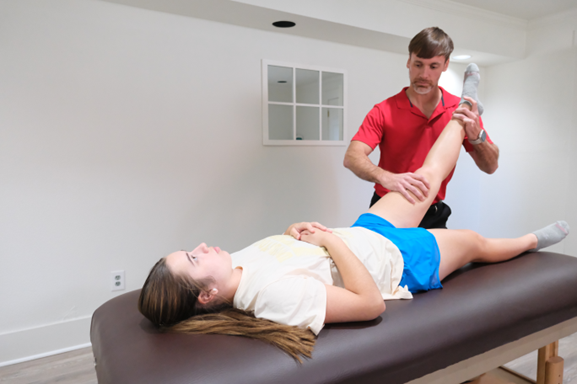
MAT begins with a detailed assessment of joint range of motion and muscular function. If a joint isn’t functioning as it should, it’s often because one or more muscles responsible for controlling that movement are inhibited.
Using precise palpation, specific isometric activation techniques, and a structured system of checks and balances, each session includes joint range of motion assessments, isolated muscle testing to identify positional weaknesses, and precise palpation of specific muscle attachment sites. MAT helps re-establish proper connection between the nervous system and the muscle. Once that connection is restored, the muscles can support the joints the way they were designed to. This systematic process allows treatment to be highly specific, individualized, and objective.
Results You Can Expect are Progressive Improvements in:
- Joint range of motion with stability
- Reduced pain and compensatory muscle tension
- Faster recovery from activity or injury
- Improved strength, coordination, and performance
- Reduced risk of future injury
Why Pain and Tightness Persist
Tight or tense muscles are often not the problem—they are the body’s way of protecting itself when stability is lacking. When certain muscles are weak or inhibited, surrounding muscles increase tension to compensate. While stretching may temporarily increase mobility, doing so without restoring muscular strength and joint stability can increase vulnerability to injury.
MAT addresses the underlying weakness that drives compensation patterns, helping reduce tension naturally by restoring proper muscle function.
Why Muscles Stop Working Properly
Muscle inhibition doesn’t usually happen all at once. It develops gradually due to factors like:
- Past injuries (even ones you think you’ve “recovered” from)
- Repetitive movement patterns
- Overtraining or poor recovery
- Prolonged sitting or postural stress
- Trauma, stress, or surgery
Even highly active individuals—people who weight train regularly, train hard in general, and “do all the right things”—can have muscles that are not contracting efficiently. When that happens, strength training, mobility work, stretching, or even the various types of therapy may provide only temporary relief.
How MAT Is Different from Other Approaches
MAT is not massage, stretching, or passive therapy.
- Stretching provides “flexibility” but doesn’t restore strength or control.
- Massage can feel great, but if underlying weakness is present, the relief is often short-lived.
- Exercise alone improves performance over time but doesn’t always correct underlying muscular imbalances.
- MAT focuses on improving neuromuscular efficiency—ensuring the intended muscles are doing their job at the right time. When muscles are functioning properly, movement becomes more fluid, pain decreases, and progress becomes sustainable.
Benefits of Muscle Activation Techniques
Clients often report:
- Reduced or eliminated pain
- Improved joint stability and control
- Increased strength without additional strain
- Better movement efficiency
- Faster recovery from training and daily activities
- A renewed sense of trust in their body
- Most importantly, MAT helps people understand why their body feels the way it does—and what’s needed to change it.
Why I Practice MAT
After years of intense training and multiple injuries, I learned firsthand that no amount of exercise alone could fix certain issues. MAT didn’t just relieve my pain—it changed how I understand the body and movement altogether. That experience is why I’m passionate about helping others restore function, not just manage symptoms.
Initial consultations go over health history obtained from a filled-out questionnaire detailing a broad range of health information. Main areas of concern will be targeted when injury histories are more extensive. Each MAT session begins with a detailed assessment to identify movement limitations and muscle weaknesses. Treatment focuses on activating inhibited muscles and restoring proper neuromuscular control. Sessions are individualized based on your needs, goals, and activity demands.
MAT can be used as a standalone service or integrated with strength training, rehabilitation, and performance programming.